

Artificial intelligence has occupied a strange place in the minds of agency owners for the better part of two years: somewhere between existential threat, silver bullet, and nonstop industry obsession.
During the post-COVID boom, agencies couldn’t stop talking about tales of survival turning into rapid growth: hiring fast enough, managing demand, protecting margins, sustaining momentum in a suddenly overheated market. But sometime in 2024, the conversations I was having with owners shifted. Only just slightly at first, then recently the wave crashed upon the shore.
AI stopped being a side topic and became the topic.
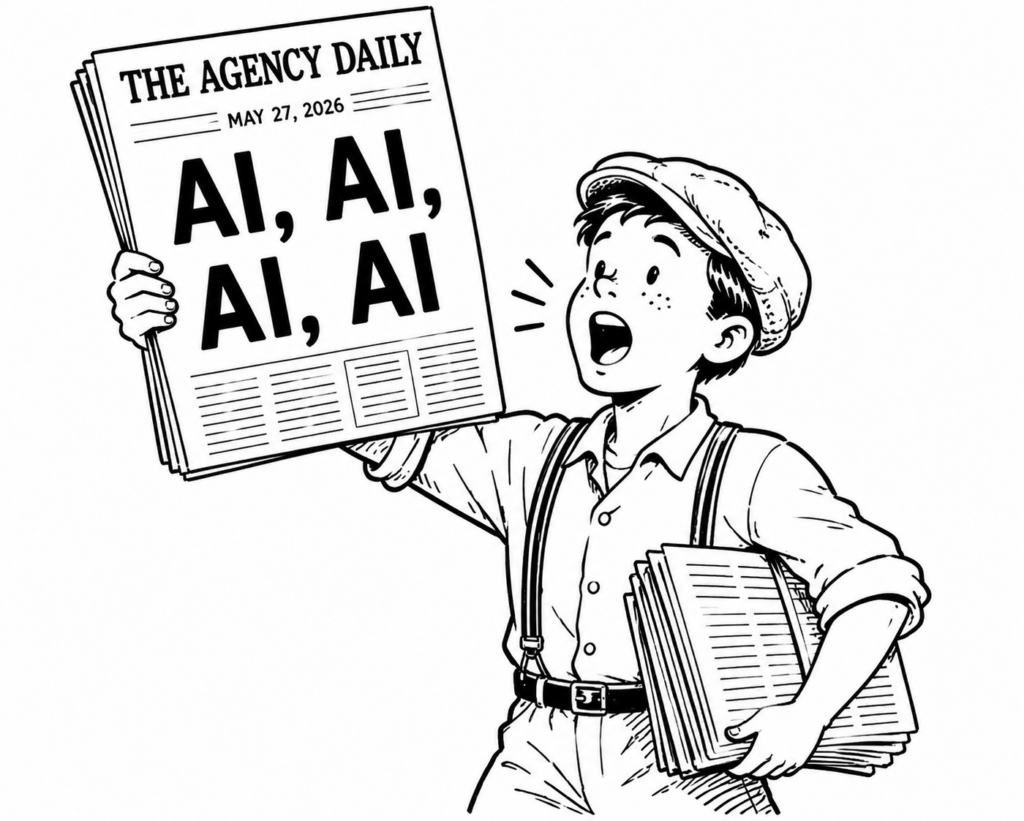
Today, when I ask agency owners what they’re most focused on, besides just running their business, artificial intelligence comes up with remarkable consistency. In another era, agencies obsessed over the latest Google bombshell, social media algorithm changes, or the latest design trend. Now the industry seems locked in a permanent state of AI breaking news. If the agency world had its own version of cable gossip media, it would run a 24-hour AI ticker across the bottom of the screen.
I have my own experiences with the technology, of course. Like most people in the industry, I’ve experimented with tools, seen impressive demonstrations, heard scattered stories of dramatic productivity gains and bold predictions about the future of work. But increasingly, it felt impossible to separate signal from noise from hype. I realized I’d spent plenty of time hearing about AI, but not enough time sitting in a room full of people actively trying to build businesses around it.
That was what brought me to Austin last week for Vistara, a conference hosted by E2M and aimed squarely at agencies attempting to navigate, or perhaps even capitalize on, the AI movement.
The gathering drew agency owners, operators, technologists, consultants, and evangelists, all trying to answer roughly the same question: What, exactly, is this technology doing to our industry and what are we going to do about it?
Some attendees arrived looking for efficiency. Others seeking reinvention. A few seemed convinced they were witnessing the early stages of a once-in-a-generation transformation. And underneath nearly every conversation was the same unspoken tension: the fear of falling behind.
I came to observe more than proclaim. I wanted to understand how deeply agencies were actually integrating AI into their operations, where the excitement felt legitimate, where the skepticism lingered, and how people inside the industry were making sense of a future that still feels remarkably undefined.
With all that in mind, I’ve put together this extensive recap divided into two parts.
The first is purely observational: what I heard, what people shared, what was demonstrated, and what repeatedly surfaced in conversations throughout the event. No grand conclusions. No hot takes. Just the clearest possible rendering of the room itself, what Detective Joe Friday famously called “just the facts ma’am.”
The second part will be more interpretive. After more than two decades in the agency world, and hundreds of conversations with agency owners at every stage of growth, I have my own perspective on where enthusiasm tends to outrun reality, what operational truths rarely change, and why certain patterns inside agencies repeat regardless of the technology cycle surrounding them.
Before diving in, though, two disclaimers feel necessary.
None of these disclaimers invalidate the ideas presented there. But it does shape the lens through which they were presented and it’s worth keeping that in mind throughout the conversation. Because underneath all the demos, terminology, positioning, and predictions, there was something else happening in the room.
What struck me before the conference even officially began was that Vistara didn’t feel like a typical “let’s cram people into a ballroom and blast PowerPoints at them” sort of event. From the moment I arrived at Austin’s Hotel Van Zandt, a place so aggressively stylish it almost feels contractually obligated to smell like expensive candles and bourbon, you could tell E2M wanted this to feel like something more curated. More communal. More premium.
And to be fair, they largely pulled it off.
Day 0
The Devil’s Highway and Entering the Funnel
I made the trip down from Dallas on Vonlane for the first time, partly because the Dallas-to-Austin drive deserves to be studied by scientists as one of the great endurance events in modern transportation, and partly because I figured four uninterrupted hours might be useful to think, work, and mentally prepare for two straight days of AI conversations. There’s something oddly fitting about heading to an AI conference while riding in a luxury bus that feels one software update away from driving itself.
Unfortunately, I arrived too late for the kayaking event on Lady Bird Lake, which felt like missing one of the more quintessentially “Austin” moments of the conference. But by the evening mixer, graciously sponsored by CRM provider HighLevel (thank you for the drinks), it became clear this wasn’t just a content play. As I awkwardly chased the constantly shifting shade around the hotel pool deck under the brutal Texas sun (for the record, despite the setting, swimsuits were nowhere to be found), I realized there was real investment behind the experience. There was also a subtle but unmistakable feeling that I was simultaneously participating in a conference and carefully walking my way through a very well-constructed sales funnel.
Day 1
A Trippy Start and Great Content
The next morning started the way good conference mornings probably should: with a long walk along Lady Bird Lake trying to decide what, exactly, I hoped to get out of all this. Austin has a way of making you feel simultaneously calm and entrepreneurial, just the right energy I wanted for the next two days. By the time I made it back to the hotel for breakfast tacos and coffee, notebook in hand, I was ready.
Then the conference opened with…I still don’t fully know how to describe it.
Imagine a cross between interpretive dance, a samurai sword performance, Cirque du Soleil, and what might happen if an AI image generator was asked to produce “corporate mysticism.” There were glowing visuals. There were dancers. There may have been fairies. I’m still processing it.
The Agentic Agency
Eventually Brent Weaver, CEO of E2M, took the stage and grounded things back in reality. Honestly, I fully expected him to be the samurai guy. His message, more or less, was that every era of the agency world believes it’s witnessing the end of itself. WordPress was supposed to kill developers. Apps were supposed to kill websites. Social media was supposed to kill everything. No-code tools were supposed to flatten the industry. And now AI has arrived as the newest contestant in the ongoing “this changes everything” pageant.
That theme, equal parts excitement, fear, opportunity, and existential confusion, would carry through nearly every conversation over the next two days.
The AI Execution Gap
One of the first and more grounded talks came from Brittany Muller of Orange Labs, who spoke about what she called the “AI Execution Gap.” While much of the industry is busy posting AI screenshots on LinkedIn like they just discovered fire, her focus was far more practical: how do agencies actually move AI beyond novelty and into operational value?
Her framework was refreshingly simple. Start with a problem. Find repetitive work. Identify friction. Validate a useful outcome before automating anything. In many ways, it sounded less like an AI presentation and more like basic business common sense, which, frankly, may be why it stood out so much.
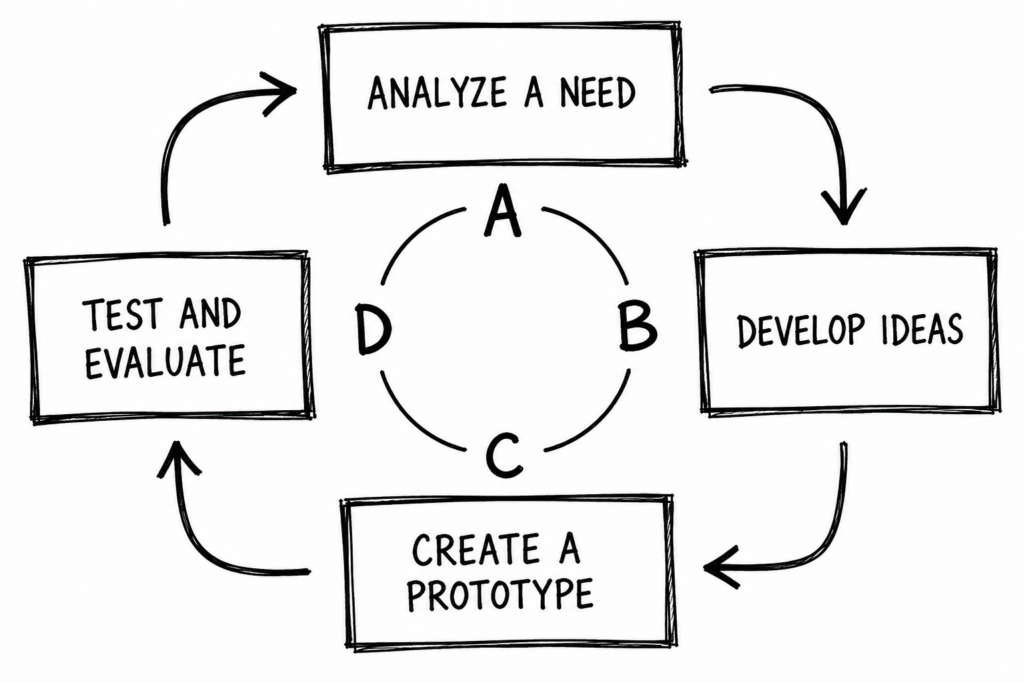
There was also a fascinating undertone to her talk: AI isn’t replacing expertise nearly as much as it’s democratizing execution. The engineers in the room kept pointing out that much of this resembled standard software development thinking. But now, non-technical operators can increasingly bring ideas to life without massive budgets or dev teams standing between concept and execution.
That felt important.
Selling AI Retainers
Dale Bertrand of Fire and Spark followed with one of the more pragmatic agency-focused sessions of the conference: how agencies might actually package and sell AI services without repositioning their whole business. His approach centered less on promising magical transformation and more on helping clients experiment intelligently via training, piloting, validating outcomes, then building recurring strategic relationships around ongoing optimization.
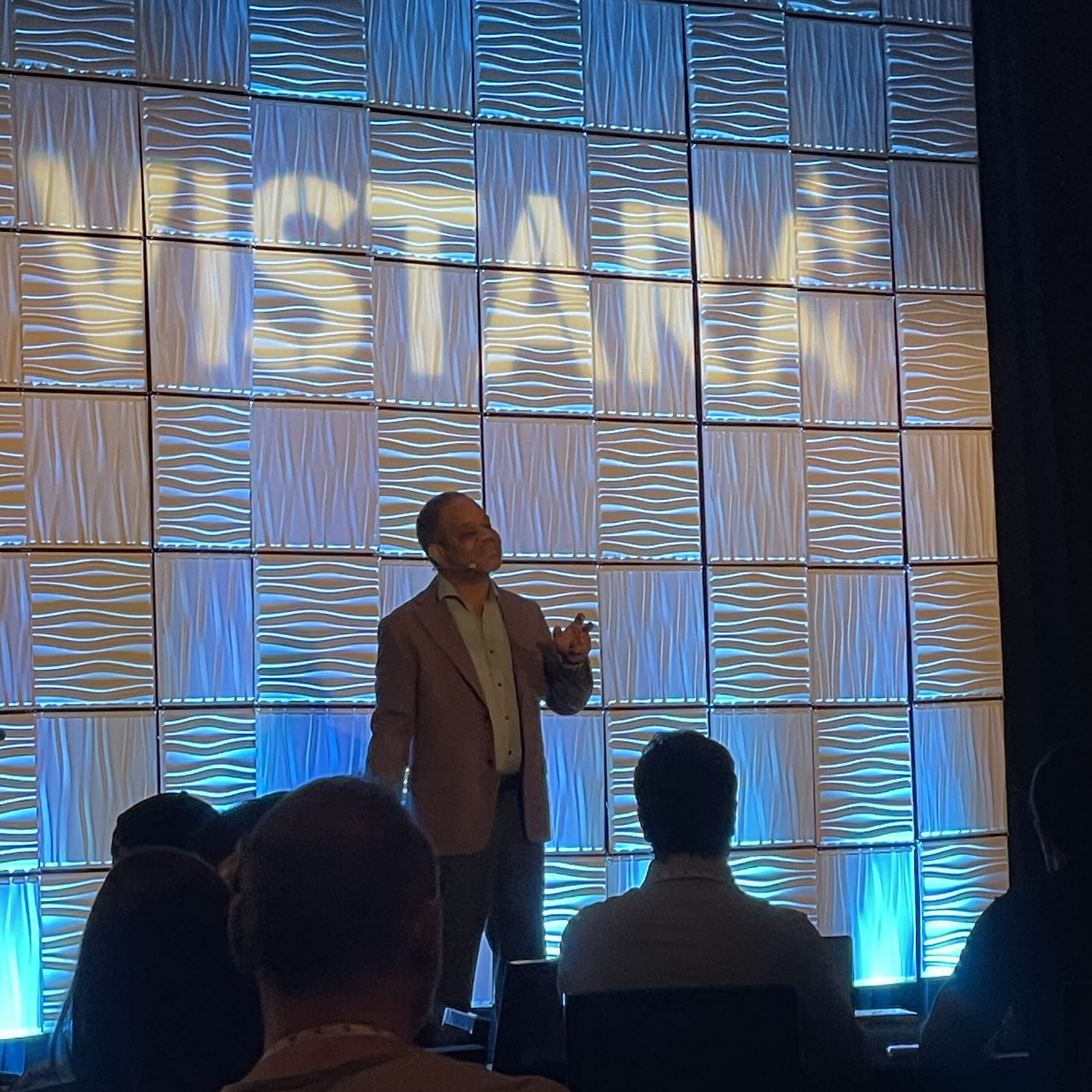
In other words: don’t sell AI as wizardry. Sell it as business improvement.
Which, if we’re being honest, is probably how most successful agencies have always won anyway.
Sponsor Obligations, Reflection, Cookies & BBQ
Not every session landed with equal force. One pre-lunch presentation felt less like thought leadership and more like a sponsored reminder that software companies still need lead generation too. Such is the natural ecosystem of conferences everywhere. Somewhere between the fourth slide about pipeline automation and my second coffee refill, I found myself thinking less about AI and more about how difficult it is to make operational discipline sound exciting.
Still, even as a less provocative talk, it revealed something useful: agencies remain deeply inconsistent at building systems for themselves, despite being exceptionally good at advising clients to do exactly that.
By the afternoon, my brain had reached its natural saturation point. I had to miss a couple of afternoon sessions, took a few calls, and opted instead for reflection over additional information overload. Conferences have a law of diminishing returns, and I’ve learned that sometimes the most useful thing you can do is stop consuming long enough to actually think.
That evening brought sponsor mixers, drink tickets, and the familiar ritual of conference networking: my typical modus operandi being to have fewer, more meaningful conversations while also reconnecting with familiar faces.
To their credit, the sponsors were generally interesting and included a mix of AI tooling companies, infrastructure providers, and various flavors of “the future of agency operations”, all offering a cool tech product raffles. But the undeniable winner of the sponsor hall was Dot & Co (an E2M subsidiary that provides fractional account management), who somehow produced custom cookies featuring attendees’ company logos.
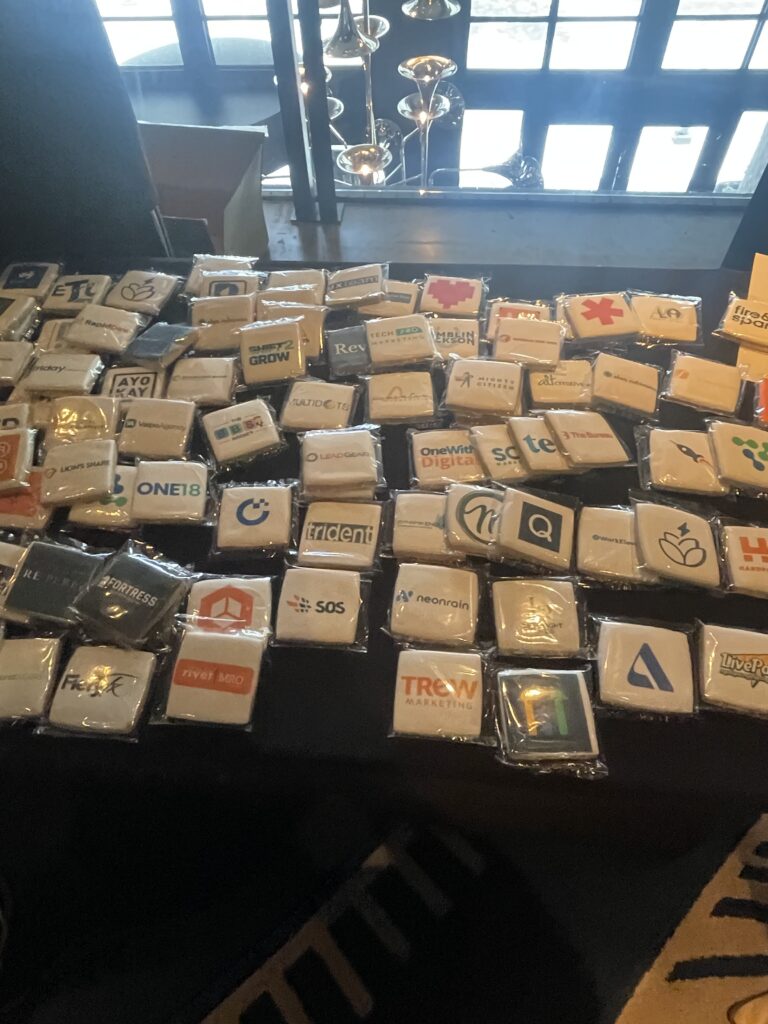
Except mine as luck wouldn’t have it, and perhaps others, I can only live in my own pain.
Which I’d like officially noted for the record. It’s only now that I can comfortably speak about recovering from this emotionally devastating situation. While I would love to have eaten my own logo, I am just joking…mostly.
After dinner at what I believe was Michelin-rated barbecue, because of course Austin now has Michelin-rated barbecue, I returned to the hotel exhausted, overstimulated, and increasingly aware that nearly every conversation at this conference was orbiting the same unresolved question:
Is AI fundamentally changing agencies, or simply accelerating trends that were already happening?
Day 2
Bringing it all home
Day two began much like day one: another long walk, another attempt at mental clarity, this time at a much more heightened pace given the reminder from day 1 that conference seating strategy matters far more than you initially think it does.
The morning keynote from E2M founder Manish Dudharejia leaned heavily into one of the conference’s dominant analogies: AI as the ATM moment for agencies. ATMs didn’t eliminate banks, he argued. They expanded what banks could do. More importantly, banks themselves didn’t build the ATMs. Entirely new categories of expertise emerged around them.
It was one of the better calming metaphors of the event.
Because beneath all the AI panic sits a truth: agencies have survived enormous technological shifts before. Entire roles have appeared out of nowhere over the past twenty years. Social media managers didn’t exist. SEO strategists barely existed. UX designers, CRO specialists, automation architects, most modern agency roles were invisible a generation ago.
The more compelling argument isn’t that AI eliminates work. It’s that it changes where value lives.
How to Get AI to Recommend Your Brand
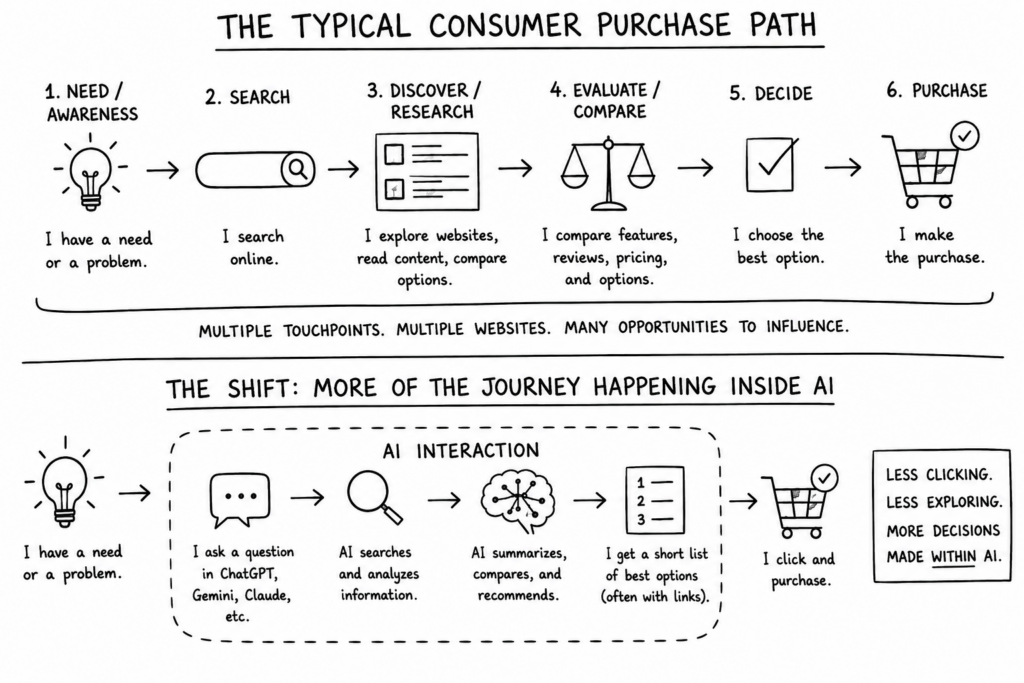
Andy Crestodina with Orbit Media followed with an intensely technical presentation on AI search (increasingly being referred to as AEO or GEO) and the increasingly blurry future of discovery online. Andy talked at approximately the speed of an auctioneer being chased by bees, but underneath the rapid-fire delivery was an important idea: buying decisions are increasingly happening inside AI systems themselves.
In the past, search was about getting found. A prospect searched Google, visited your website, clicked around, maybe checked reviews, maybe asked a friend, and eventually reached out. But behind the scenes, AI tools are collapsing parts of that journey. People are beginning to ask questions directly inside ChatGPT, Gemini, Claude, and whatever else launches next week, meaning brands may have fewer opportunities to shape perception before recommendations are formed.
In Andy’s framing, the future challenge becomes less about traditional ranking and more about teaching AI systems how to advocate for your brand before a customer ever visits your website.
Still, what was fascinating was how familiar the underlying strategy sounded beneath all the technical terminology. Build genuinely useful content. Answer real questions well. Demonstrate expertise clearly. In many ways, AI search appears to be rewarding the same thing good SEO has increasingly rewarded for years: quality, clarity, authority, and usefulness over manipulation.
Andy closed with a line that may have been one of the most important quotes of the conference:
“I’m not trying to do it faster, I’m trying to win.”
And honestly, that sentiment reaches far beyond AI. In a world increasingly obsessed with speed, automation, shortcuts, and efficiency, it feels worth remembering that speed itself is never actually the goal. Speed only matters after you understand what creates success in the first place. Faster execution of the wrong strategy is still losing, just more quickly.
That idea lingered with me long after the presentation ended. Because if AI ultimately changes anything meaningful for agencies, the real opportunity probably isn’t simply doing more work faster. It’s creating more space for better thinking, better strategy, and better outcomes.
By this point, one thing became increasingly clear: Vistara was not just a conference about AI. It was also a conference about positioning around AI.
Case Studies and Pitches
Several sessions evolved into case studies and presentations centered around E2M’s broader “Agentic Agency” vision, a consulting and implementation offering designed to help agencies operationalize AI more deeply inside their businesses. There was nothing particularly deceptive about it; honestly, the offer was fairly well constructed. But you could feel the event gradually shift from exploration into orchestration.
Still, the case studies themselves were useful. Agencies demonstrated proposal automation, SEO tooling, operational efficiencies, and niche-specific AI applications. None of it felt world-ending. Most of it felt practical. Incremental.
Which, ironically, may have been the most reassuring thing about the entire conference.
At some point we broke for lunch, I escaped yet another barbecue recommendation from my friend Garrett in favor of a quiet Thai restaurant where we spent an hour discussing AI, business, the future, human nature, and probably at least three topics we each thought sounded smarter than they actually were. By day two, conference fatigue had set in and everyone seemed slightly more philosophical than normal.
Get on the Bus
Then came David C. Baker.
For anyone who’s spent serious time in the agency world over the last two decades, Baker occupies a sort of elder statesman role in agency thought leadership. His session, titled Get on the Bus, was easily one of the strongest of the conference because it resisted both extremes: neither blind optimism nor theatrical doom.
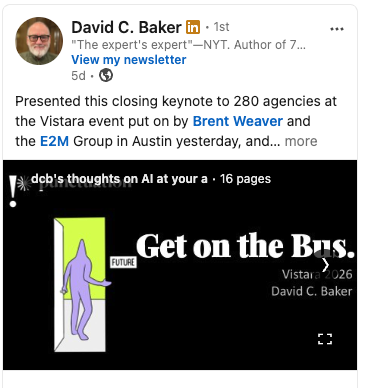
At one point he joked that AI is moving so fast “you have to be unemployed to keep up,” which may have earned the single biggest laugh of the event because it also felt deeply true.
His larger point was that agencies have always existed inside cycles of creative destruction. Desktop publishing disrupted typesetting. WordPress disrupted custom development. Offshoring disrupted geographic advantages. Every generation believes its disruption is uniquely apocalyptic.
Usually it isn’t. Baker argued that the real opportunity in AI isn’t replacing human thinking but elevating it, allowing agencies to spend less time trapped in repetitive execution and more time focused on strategy, insight, and outcomes.
He also made what may be the most uncomfortable, but perhaps most accurate, observation of the conference: agencies that cling hardest to the way things used to work are often the ones least equipped to survive what comes next. Not because adaptation is easy. But because history suggests resistance rarely stops momentum. And that, more than anything else, seemed to be the underlying emotional current of the entire event. Not excitement. Not panic. Uncertainty.
A room full of smart people collectively trying to determine whether they were witnessing a technological revolution, an operational evolution, or simply the latest cycle of industry overcorrection. Maybe it’s all three. What I left with wasn’t certainty about AI. If anything, I probably left with as many questions as answers. But I did leave feeling convinced of something else:
The agencies most likely to thrive probably won’t be the ones screaming loudest about AI. They’ll be the ones experimenting thoughtfully, staying grounded in fundamentals, and continuing to solve meaningful problems better than the next person.
Even if, somewhere along the way, they also learn how to make a samurai fairy dance presentation work at a conference opener.
AI Action Plan
By the final stretch of the conference, the tone shifted from observation and philosophy into action planning. Brent Weaver stepped back in and walked attendees through a fairly practical framework for identifying operational problems, evaluating opportunities, and prioritizing AI initiatives using a basic impact-versus-effort matrix. Nothing revolutionary, necessarily, but honestly probably the right exercise to close things out after two straight days of information overload, ideation, predictions, demos, and enough AI terminology to short-circuit most people’s nervous systems.
In many ways, it felt like the conference finally arrived at the most important question of all: “Okay… so what are you actually going to do with this?” And I think that’s ultimately where most agencies are right now.
Not standing at the finish line of some fully realized AI future, but somewhere much earlier in the process: sorting through noise, trying to separate meaningful opportunity from hype, attempting to understand where leverage opportunities actually exist, and figuring out how to adapt without losing themselves in the process.
From there, I had to make a fairly quick exit to catch an Uber over to another nearby hotel for my bus pickup back to Dallas. Naturally, I was promptly informed the bus would be delayed a bit. No surprise given the devil’s highway between Austin and Dallas always seems to take a few prisoners.
Sitting quietly in the hotel lobby, somewhere between mental exhaustion and reflection, I found myself replaying the last two days in my head. The conversations. The excitement. The positioning. The uncertainty. The optimism. The sales pitches. The very real opportunities. The very real fear.
And maybe that’s the most honest way to describe the current AI moment overall: a strange mixture of legitimate transformation and collective improvisation.
Eventually the bus arrived, and after one very uneventful and surprisingly comfortable ride home, so ended my brief journey into the center of the agency world’s AI obsession.
You’ve finished part one: my more journalistic view of the conference itself. From here, I want to shift into my own perspective based on what I observed and learned at the event, my experience navigating multiple technological shifts as an agency owner, my conversations as host of An Agency Story podcast, and perhaps most importantly, my role as a coach helping agency owners navigate AI alongside the many other challenges that come with agency life.
The Future
First and foremost, as stated in my initial disclaimer, nobody truly knows exactly where all of this is taking us. Including me. Anyone confidently predicting the future of AI is likely overstating their certainty, often influenced by their own incentives, fears, or hopes for what they want it to become.
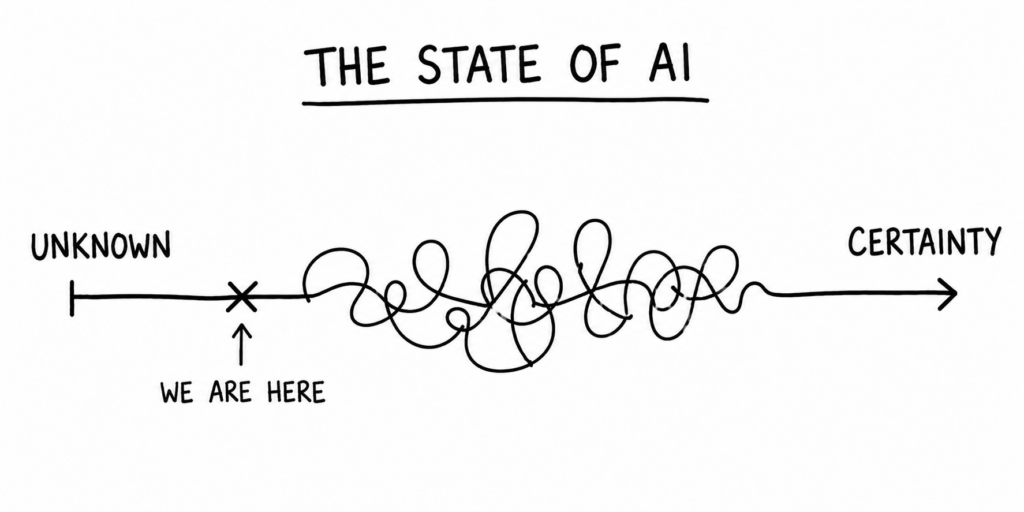
Depending on who you ask, AI is either the next industrial revolution, the beginning of the end of human work (or species if you want to get real doomsday about it), or simply another tool in the long line of technological shifts that came before it. From what I’m seeing across agencies and client conversations right now, the truth is likely somewhere in the middle. What does seem increasingly clear is that AI is a meaningful shift in how businesses operate, create value, and make decisions.
In moments like this, I think the healthiest posture is grounded optimism. Calm fears, stay thoughtful, remain adaptive, and avoid “drop everything and run” reactions. This is not the first major technological evolution agencies have had to navigate, and it will not be the last.
How Agencies Should Be Leveraging AI
1. Outcome Driven
For the better part of the last decade, agencies have already been moving toward stronger positioning, specialization, and clearer differentiation. Agencies that have embraced that shift have generally grown faster and more consistently than broad generalist firms.
Alongside that movement has been another important shift: selling outcomes instead of activity.
Clients increasingly want confidence, clarity, strategy, and measurable business impact and are less and less likely to be satisfied by deliverables, hours, or output. AI is accelerating that expectation dramatically.
The biggest misunderstanding I see right now is viewing AI primarily as an efficiency tool and a wordy search feature. Efficiency absolutely matters, but efficiency alone does not create long-term competitive advantage because AI will eventually make efficiency accessible to almost everyone.
If every agency can generate more content, automate reporting, speed up workflows, and create deliverables faster, then speed itself eventually becomes commoditized. The real opportunity is what agencies do with the capacity AI creates.
The agencies that win will be the ones that use AI to become more strategic, more insightful, more proactive, and ultimately more valuable to their clients. AI removes more and more operational friction and grunt work, which raises the bar on what clients will expect from agencies moving forward.
From what I’m seeing, agencies that are not meaningfully leveraging AI beyond simple prompting, while also not evolving toward stronger positioning and outcome-driven thinking, are now two steps behind. And those are not small steps. If this sounds like a wake up call, it is.
2. Jobs to Do
One of the simplest ways to begin thinking about AI is to view it like your next hire, but for micro jobs.
For example, I recently “hired” Serif AI to help manage my inbox. For around $50/month, it helps organize emails, categorize conversations, draft responses, and handle tasks I once paid a VA to support. It is not replacing my thinking. It is removing low-value operational friction.
That is just one example of many. Tools like Claude Co-Work, Lovable, and others are opening up opportunities for businesses to automate, connect, analyze, and build things that previously required significant technical skill, expense, or manpower.
In a conversation recently, someone described AI as the “super intern,” and I think that framing is incredibly helpful. AI handles the grunt work that often slows higher-level thinking down.. It can shuffle information between systems, organize and summarize data, carry the “mail” between tools and departments, monitor activity, generate first drafts, and connect workflows in ways that were previously too expensive or time-consuming to justify.
What’s powerful is not just the efficiency itself, but what that efficiency unlocks. Once the operational friction is reduced, businesses suddenly gain access to better dashboards, better visibility, faster insights, more connected systems, and ultimately more strategic decision-making than they previously had the bandwidth to create.
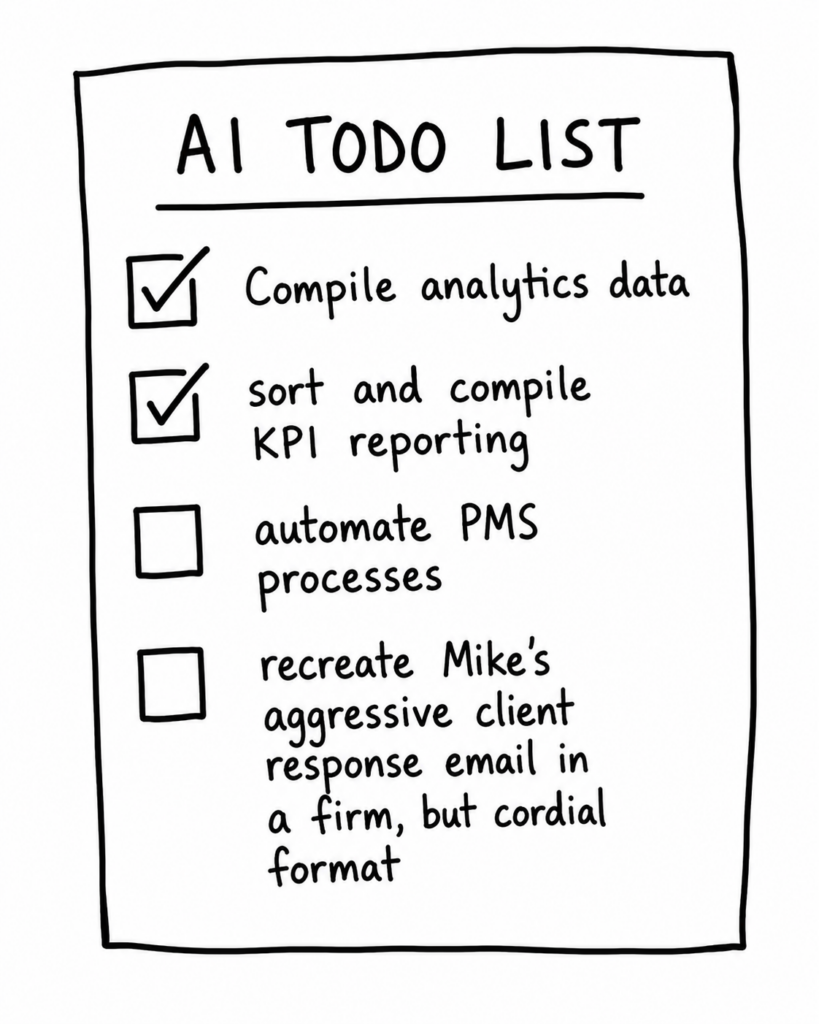
The biggest opportunity is not simply replacing work. It is expanding what your business is capable of doing.
Instead of asking: “Where can I apply AI?” I think better questions are:
- What repetitive tasks in your business consume time but don’t truly require human creativity or strategic thinking?
- If you could instantly hire a highly capable intern for $50–$200/month, what would you want them handling every single day?
- Where are you or your team acting more like processors than thinkers?
- What information, insight, or reporting do you wish you had access to all the time?
- What opportunities would you pursue to become more effective and valuable for clients if time, energy, or effort were no longer major constraints?
- What could your business become known for if your team had dramatically more capacity, speed, and insight available to you?
The agencies that think beyond efficiency and begin imagining new capabilities will likely create the most meaningful long-term advantage.
3. Get Ahead of Clients
Most agencies have already started interfacing with the AI conversation in both good and frustrating ways. Some clients expect work to become cheaper overnight. Others hand over AI-generated strategy and assume it replaces expertise entirely. Many are simply trying to figure out what this all means for their own businesses.
At the same time, clients themselves are changing. They are researching differently, learning differently, evaluating differently, and forming opinions differently because of AI. That shift matters just as much as the tools themselves.
The near-term challenge I believe many agencies will face is the rise of AI-first agencies entering the market promising faster delivery, lower costs, more automation, and “better” results at a fraction of the price. In several instances, I’ve already seen this happen in real time.
In many ways, this reminds me of the early-to-mid 2000s when digital-first agencies emerged while traditional agencies were still trying to adapt. The newer firms simply sounded more modern, more capable, and more aligned with where the market believed things were headed. It doesn’t mean they are (or aren’t), it’s just going to sound too good to not try for all the businesses seeking technological clarity.
Some AI-first agencies will absolutely succeed. Many will also eventually fail. Like every wave of startups, some will oversell capability while others will genuinely innovate. Eventually, they will learn the same lesson every agency before them had to learn: high-powered tools and capability alone do not create business results. Business acumen, judgment, relationships, strategic clarity, and execution still matter tremendously.
The key for agencies today is to be offensive, not defensive, in client conversations around AI.
Do not wait until another company knocks on your client’s door positioning you as outdated, inefficient, or overpriced because they are “AI-first.” That conversation is coming whether agencies choose to confront it or not.
Instead, agencies should proactively lead the conversation within the context of their expertise and the outcomes they are responsible for creating. This does not mean every agency suddenly needs to become a broad AI consultancy. But it does mean agencies should be helping clients understand how AI is impacting the marketing, communication, reporting, visibility, and decision-making functions the agency is directly responsible for influencing.
Just as importantly, agencies need to become comfortable with the reality that AI may replace portions of their own lower-level execution over time and that proactively helping clients navigate that shift is better than pretending it is not happening.
In many ways, agencies have an opportunity to strengthen trust by being transparent about this reality.
Yes, AI allows us to do certain things faster and more efficiently. That’s exactly why we are using the time and capacity it creates to become more strategic, insightful, proactive, and valuable to your business.
The opportunity is not simply defending against AI-first competitors. The opportunity is strengthening your strategic position before someone else attempts to commoditize your relationship.
The agencies that handle this well will not just use AI to reduce effort. They will use it to create better visibility, faster insight, stronger responsiveness, and ultimately become more embedded in the client’s business than they were before AI existed.
4. AI as a Strategy, Then a Layer
AI is not a long-term competitive advantage or strategy in of itself.
I like how David C. Baker frames it: there is likely a window where AI services themselves feel differentiated and strategic. But eventually, AI adoption will become as expected and commonplace as any other operational capability.
In the short term, it likely makes sense for agencies to make AI adoption a focused strategic initiative. Learn the tools. Identify opportunities. Build systems. Experiment aggressively. Capture as much low-hanging fruit as possible. Give yourself 3-6 months to complete and get up to speed.
But then, AI simply becomes part of the operational fabric of the business.
It is no longer: “our AI strategy” and instead becomes…“AI is an integral part of how we solve problems.”
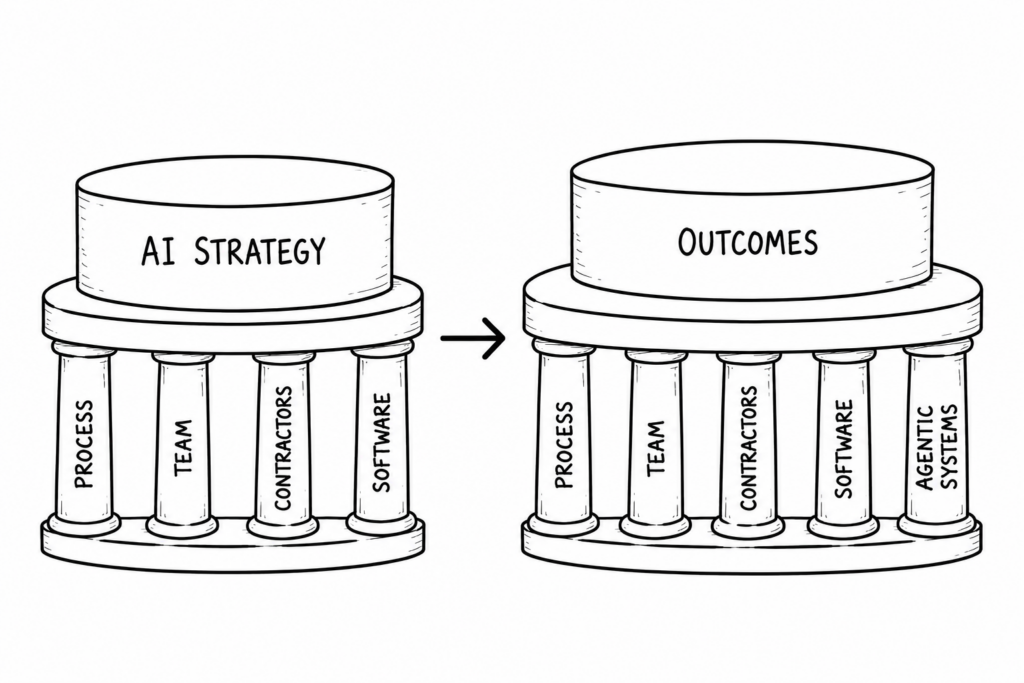
The same way businesses already think about getting things done with the team, contracting, software, and process, AI simply becomes another resource layer inside that equation.
Ironically, as AI continues to improve its ability to handle the execution layer, it needs to promote the humans to do the things AI can’t. Judgment, relationships, strategic thinking, communication, taste, and trust become the human differentiators.
5. Dedicated Resource
I strongly believe agencies will need dedicated ownership or guidance around AI initiatives, quickly.
In many ways, once you get over what seems like just a new cost, it will feel like a dream role. If you can dream, you have a role that can make it happen. This role is focused on figuring out how to make all those business challenges and opportunity dreams real as well as bed down your AI fears. They stay current on emerging tools and advancements, monitor and maintain existing implementations, identify opportunities for leverage, and continuously build new capabilities into the business.
It’s someone with a business analyst left brain and an engineering-oriented right brain, or in simpler terms, a business-savvy logical creative with some technical prowess.
Historically, that combination was somewhat unicorn-like. But thanks to the rapidly increasing accessibility of technology creation, I’m hopeful this type of role becomes significantly more attainable for agencies moving forward. Like any new role, start contractually, P/T, or fractionally and then increase capacity over time as you begin to uncover the leverage opportunities.
Same Path, Different Speed
What I ultimately took away from Vistara, and from the broader AI conversation happening across the agency world right now, is that we are probably still far earlier in this shift than most people realize.
There will absolutely be disruption. Some services will become commoditized. Some workflows will disappear. Some agencies will fail to adapt. New categories of companies and roles will emerge that don’t even fully make sense yet.
But I also believe a lot of the foundational truths of an agency business are still intact. If 20+ years as an owner and a coach have taught me anything, it’s that the fundamentals will always remain supreme.
Clients will still want clarity and value trust. They will continue to pay a premium to solve their problems and will continue to have wide, open arms to receive judgment, insight, creativity, leadership, relationships, and meaningful business outcomes.
What this conference did not do was radically change my beliefs about the future of AI. What it did do was heighten my sense of urgency. Not urgency rooted in panic, but urgency rooted in leverage.
It reinforced for me that agencies need to gather some momentum to move beyond casual experimentation and begin leveraging AI more intentionally and strategically, not because AI itself is the strategy, but because the agencies that thoughtfully integrate it into how they operate, think, and create value will build meaningful long-term advantage.
The agencies most likely to thrive will probably not be the ones blindly chasing every new tool, nor the ones stubbornly pretending nothing is changing. They’ll be the ones willing to experiment thoughtfully, stay grounded in fundamentals, adapt strategically, and continue positioning themselves around value instead of activity.
At least for now, that’s where I’ve landed. Not fear. Not hype. Not certainty. Just the belief that this shift is real, worth paying close attention to, and full of opportunity for agencies willing to evolve alongside it.
If you’d like to listen to the podcast version you can find it here.