
Full truth moment. I don’t think I ever quite mastered the art of long-term strategic planning during my agency days. In the early years, we were lucky to make it to March before finally deciding what we were going to do with the year already well underway. We were also guilty of a particularly frustrating habit: dreaming up big ideas, enthusiastically sharing them with the team, and then getting distracted and subsequently not investing appropriate time, energy, or resources required to bring them to life. The ideas were plentiful. The follow-through, not always as we would have hoped.
If it pleases the court your honor, I present these slides as evidence from our team strategy planning day in early 2013.
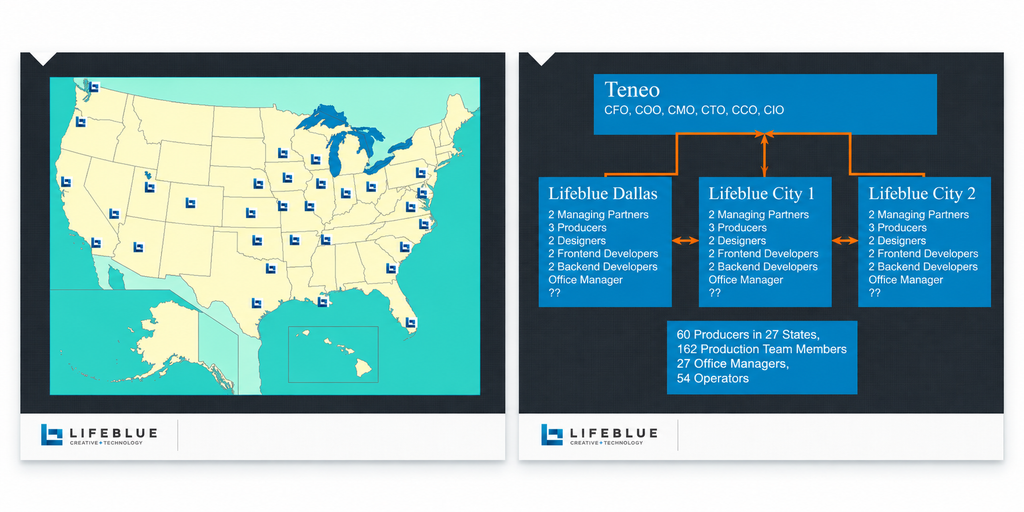
You can guess what the idea was that we were talking about accomplishing. Guess how far we got? Next to nowhere. Quite quickly after we showed this to our 10 or so person team, the idea of multi-city expansion faded into the background, never to see the light of day again. “We go where Southwest goes” was the rallying cry that never was. While the idea itself wasn’t overly unique, I am still convinced to this day that we had the model problems solved that would have allowed this to become a reality. While we eventually got much better at the art of planning, it’s an ever-present reminder that as owners, there is a disconnect between big goals, big plans, and the necessary investment to make them happen.
And so the inspiration with Elevate that started in 2025. In my 1-1 coaching work with agencies, I was able to take my hard-learned lessons from planning and correct them with those I am fortunate enough to work with. If we took the time to create meaningful goals and strategies for the business that raised the level of our gaze while meeting the business where it is at today, good things happen. And Elevate was created to create that same environment while benefiting from collaborating and connecting with others going through the same struggles, opportunities, and goals. If 2025 was a bigger success than I could have ever imagined, 2026 was like a fantasy.
The event kicked off with an informal get together on the eve of the event. I intentionally chose my own backyard for this year’s event so that I could be much more knowledgeable and intentional about the overall experience. The event was held at the Grand Hotel in historic downtown Mckinney, TX. 20 years ago, this same area was home to the first office of my agency (Lifeblue) in a time where “dodgy” was an understatement to describe the area. Its transformation is truly amazing to the extent that many of the comments included fairy tale-like and references to shows like Leave it to Beaver and Gilmore Girls. It’s one of the reasons Mckinney TX is consistently ranked as best places to live in the US.
Which is why I was inspired and excited to share a favorite Saturday gathering spot at Landon Winery to start breaking into the connection piece early. It’s about as close of a setting as you’ll find to the countless streetside drink spots in Paris. A better person would have captured the image of 10-12 owners sitting around on a 70ish degree fall evening, reconnecting with friends from last year’s events and learning the names and resumes of new ones. You’ll have to settle for this imagery instead:
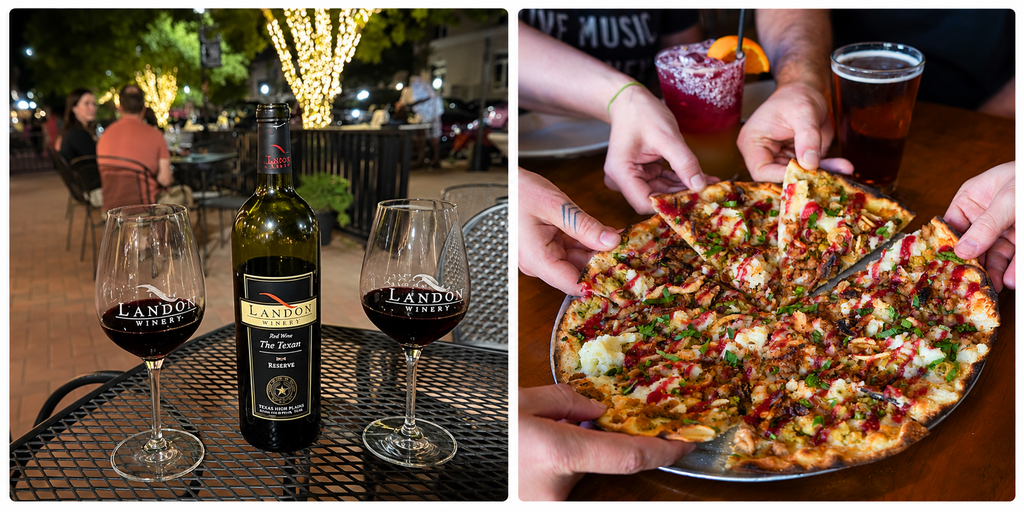
We finished the night with with pizza with everyone quickly opting in for a “family style” meal from a another local favorite, shoutout Cadillac Pizza. The quickest pizza to go…The Thanksgiving. Mashed potatoes, cranberry sauce, turkey, and I don’t know what else (you can see the picture above). It was a slice everyone was dying to try and loved to hate. A great conversation piece and couldn’t have set the tone better…sometimes we have to get a little weird to think outside the box for our own businesses.
The intention for the speakers I brought to Elevate was simple. Get those that have been through it and think a little differently to share something that is important to them. We kicked off day zero with some breakfast tacos, afterall it’s Texas y’all, and more good conversation which is always also amplified by good coffee.
Because I’m one for the unorthodox, before we set down to learn, we had to break the ice via a quick interaction of “Telespeednetworkingathon.” It of course created some light chaos but good morning buzz. I won’t share more as that’s part of being there.
“De-hatting” and Finding Leverage as an Owner – Peter Kang
First up on the mic was Peter Kang with Barrel Holdings. I’ve never heard Peter say something that didn’t make me take a step back and think and thus very much looking forward to him sharing with owners about how to “de-hat” themselves.
Peter spent 18 years building and leading his own agency before handing over the CEO reins and turning his attention to acquiring and growing a portfolio of specialized agencies. He’s had plenty of firsthand experience with one of the more persistent challenges of agency ownership: figuring out how to stop being responsible for everything.
His presentation centered on a deceptively simple question: Why do agency owners continue wearing hats they know they should take off? The answers were a familiar mix of financial concerns, previous delegation failures, organizational inertia, and the less frequently acknowledged issue of identity. After all, when you’ve spent a decade being the person who solves a particular problem, letting someone else solve it can feel surprisingly uncomfortable.
The image on his slide captures it perfectly:
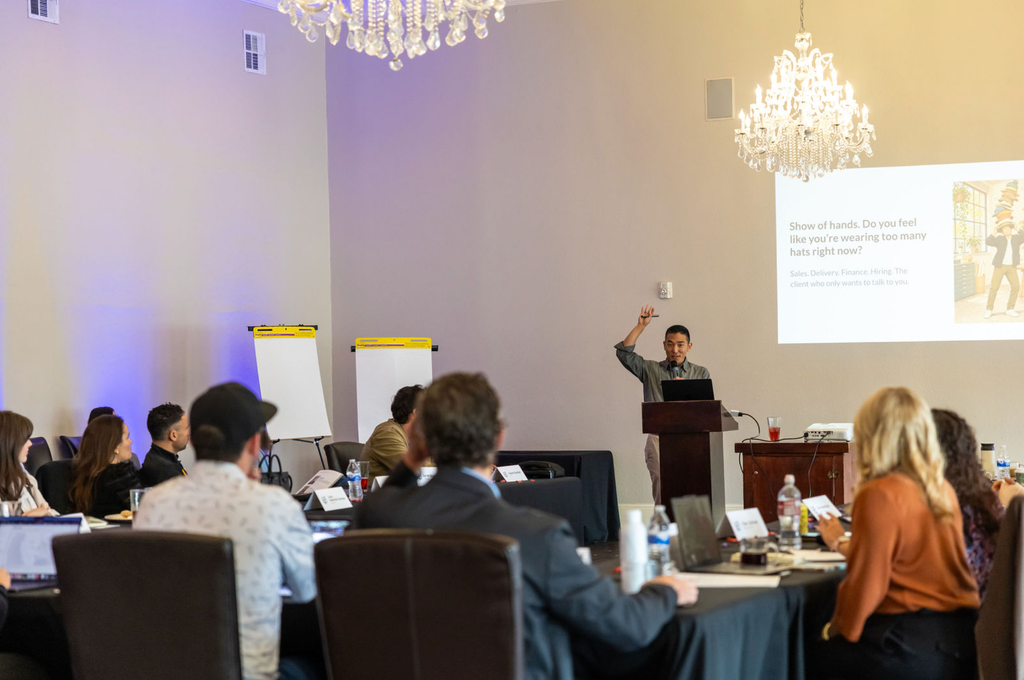

Interestingly, Peter’s advice on where to begin had little to do with delegation at all. Instead, he encouraged owners to first imagine what they wanted for their business, and their own role within it, to look like a year, three years, or even ten years down the road. It’s a subtle but important distinction. Without a clear picture of where you’re trying to go, it’s difficult to know which responsibilities are worth keeping and which are simply keeping you busy.
And perhaps that’s why so many hats stay on for so long. Owners become quite adept at being able to wear any number of hats but not always great at knowing which hats should be their’s, which hats they are even wearing at any given time, and occasionally, how to recognize the need to separate a hat into its right sized components.
After listening to the presentation, I loved the idea even more in how it set up the rest of the day. Sometimes de-hatting has to be the starting point to any good strategy, to free up the time and resources needed to venture into unknown or difficult territory.
Built to Sell, Built to Last – Roy Page
I’ve had the pleasure of knowing Roy for several years now and I’m convinced I’ve found the most down to earth person on the planet. Please share with me any awards you know of to prove this out. I think the room felt that same sentiment as well. Which is why everyone listened a little more intently when Roy shared one of his first thoughts…
There’s a certain irony in spending years building a successful agency, only to discover that the very thing responsible for its success might also be its greatest liability. You.
That was just one among several of the uncomfortable realities Roy brought to the room as the second speaker of the day. Roy, a partner at TobinLeff and former agency owner, has spent years helping agency owners navigate the complicated dance that is selling a business. But his message wasn’t exclusively for those contemplating an exit. In fact, quite the opposite.
Roy invited everyone to look at their agencies through the eyes of a prospective buyer. A perspective that can be surprisingly different from the one we develop while buried in the daily business of running them. Buyers, it turns out, have quite a few opinions. And they’re not particularly sentimental.
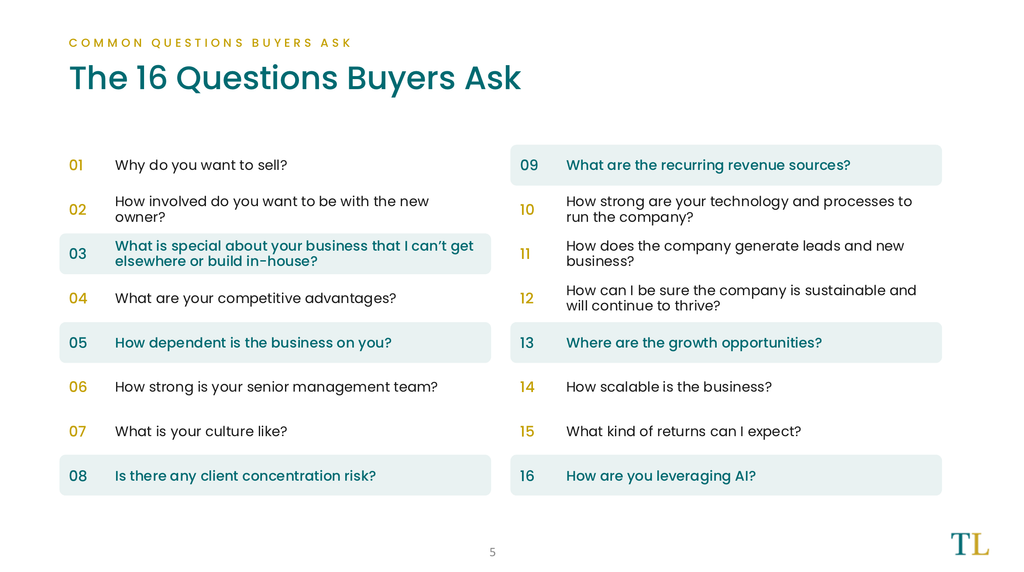
The discussion also ventured into AI, where Roy offered a refreshingly candid assessment: nobody really knows how this is going to play out. Buyers are wrestling with the same uncertainty as agency owners, but increasingly want evidence that AI is improving margins, strengthening delivery, or creating new revenue opportunities. Simply having a ChatGPT subscription probably isn’t going to impress anyone during due diligence.
As Roy brought the conversation back to the bigger picture, he encouraged everyone to forget about selling for a moment. Because the very things that make an agency more attractive to a buyer…predictable revenue, strong leadership, differentiated capabilities, and less dependence on its founder, also make it a better business to own.
Which leaves us with an interesting proposition. Perhaps the best reason to build an agency someone else would want to buy is to create one you might be perfectly happy keeping.
Where AI Fits into Your Agency Roadmap – Teri Sun
The next speaker was Teri Sun, Head of Product at Signal78. She was the only speaker I didn’t have much of a personal connection with before the event. But her experience and reputation made inviting her an easy decision. Especially given the subject matter.
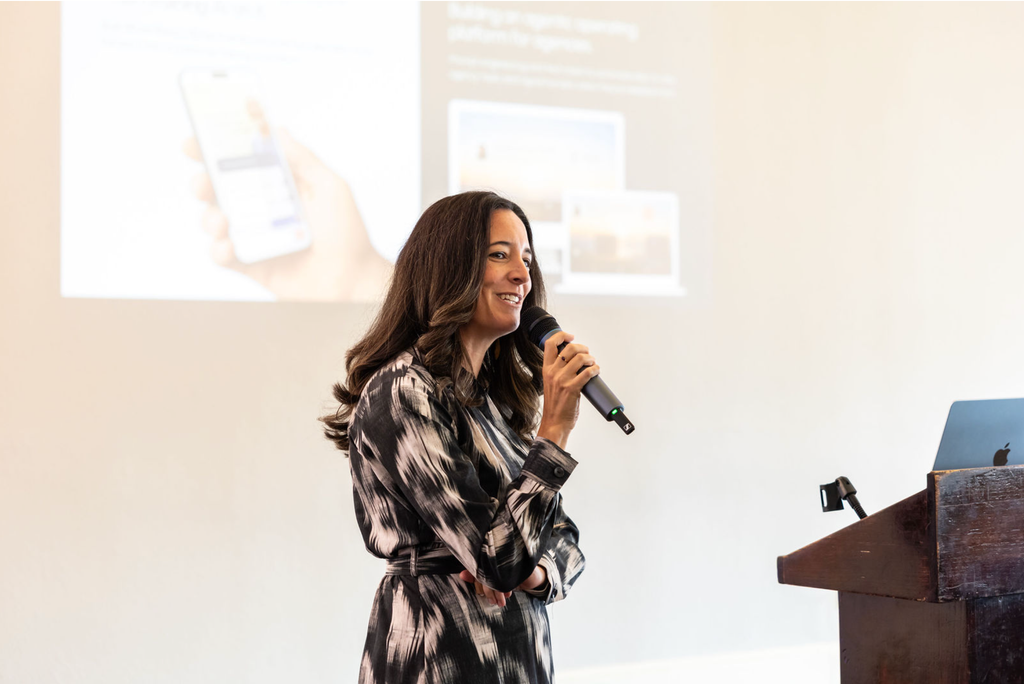
These days, when I ask agency owners what they’re most focused on, I can almost predict the answer before they finish opening their mouths. AI. Two letters that have managed to consume an extraordinary amount of oxygen in the marketing and technology world. Needless to say, ears were perked long before Teri took the stage.
The most important distinction of Teri’s presentation: doing things differently versus doing different things.
Most agencies have concentrated their AI efforts on the former. Writing proposals faster. Automating reports. Summarizing meetings. Essentially taking the work we’ve always done and finding ways to do it with fewer keystrokes, Red Bull, and stress balls. But Teri challenged us to consider something more ambitious. What if AI didn’t just make our existing services more efficient? What if it allowed us to create entirely new kinds of value?
Her practical advice was to start small. One workflow, one client, and one problem. Build the context, test the results, involve humans in the process, and expand from there. And importantly, give someone in the agency actual ownership of making it happen.
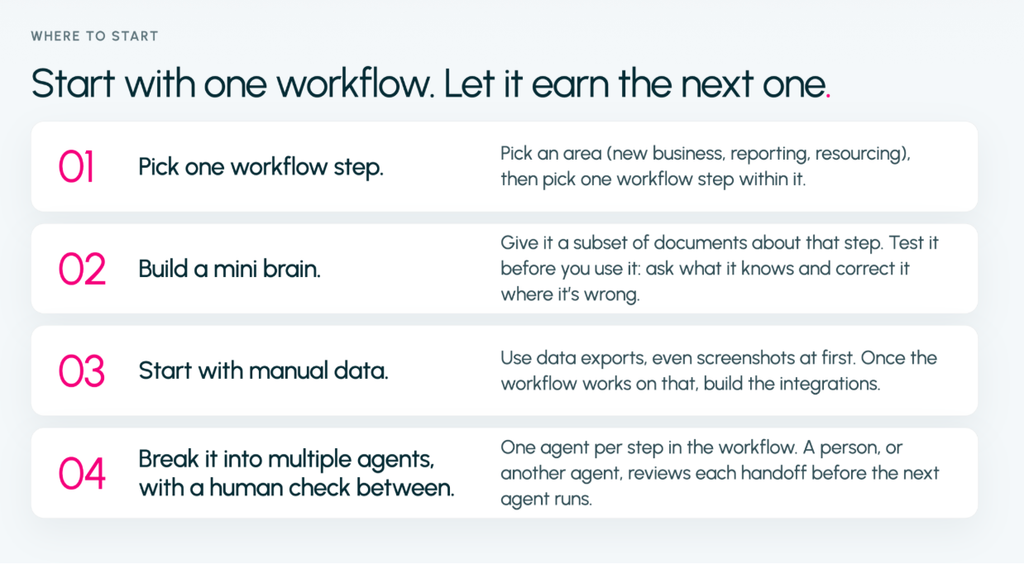
But beneath all the technical possibilities was a relatively simple challenge. Most agencies are already asking how AI can help them do their work faster. Teri left us considering whether we should be asking what entirely different work we could be doing instead.
Regenerative Business
And a quick aside and shout-out to some of Teri’s other work. I’m shouting from the mountaintops about what she’s doing with Regenerous Labs. It speaks to my heart about the potential for business to be a force for good. We don’t have to simply accept the negative impacts of business on our lives, our planet, or anything else for that matter.
Of particular interest, also an extremely hot topic these days, is her work on regenerative data centers. Teri is knee-deep in exploring how we can rethink these environmental monstrosities and turn something notorious for consuming resources into something that actually gives back.
You can learn more about regenerative data centers here. Spread the word. Soapbox out.
Lunch and a Lesson in Clear Communication
Three speakers in, and the room was buzzing with newly learned ideas and concepts from the morning. We feasted on a delectable lighter fare of soup and salad, as the room didn’t come equipped with cots for post-lunch naps. I also learned a valuable lesson in clarity and communication.
Immediately following lunch, I’d planned to liven things up with a fun agency tradition from our startup days, otherwise known as “Recess.” Don’t ask me about Blowball or Blindfolded Chair Racing. Sometimes we have to learn what we shouldn’t do in business too, people. However, apparently most of the room had long forgotten recess as a quick release of energy in an otherwise long day of learning, and had instead come to understand it as what happens when a courtroom judge essentially says, “I’m done with you. Come back later.” Damn you, Judge Judy.
I only realized this lesson when I thought we were about to engage in my planned fun, and the room was still rather empty. They’ll never know what they missed. Needless to say, it was a lesson for me in the importance of clear communication, and perhaps doing a better job of teasing what’s next on the agenda, especially when people are already preparing to disperse. But a longer break never killed anyone either.
Entering the Liminal Space – The Future is Generative – Shyam Patel
I always know we’re in for a ride when Shyam takes the stage. Self-admittedly Shyam has a brain bigger than Jupiter and sometimes you have just take an extra dose of your preferred brain enhancing chemical of choice to go along for the ride (nothing illegal folks, it’s not that kind of event). As the lone return speaker of the event, some were about to enter the Liminal Space for the first time and some had been there before, even if they don’t remember.
Shyam began by informing us that he’d been to the future. He even had photographic evidence, along with polling data suggesting that most people believed him. With his credibility firmly established, he posed a rather unusual question to a room full of agency owners: Are you a cyborg? Do you talk to robots? Interact with machines? Live in synthetic environments? Have a calendar that essentially programs your life?
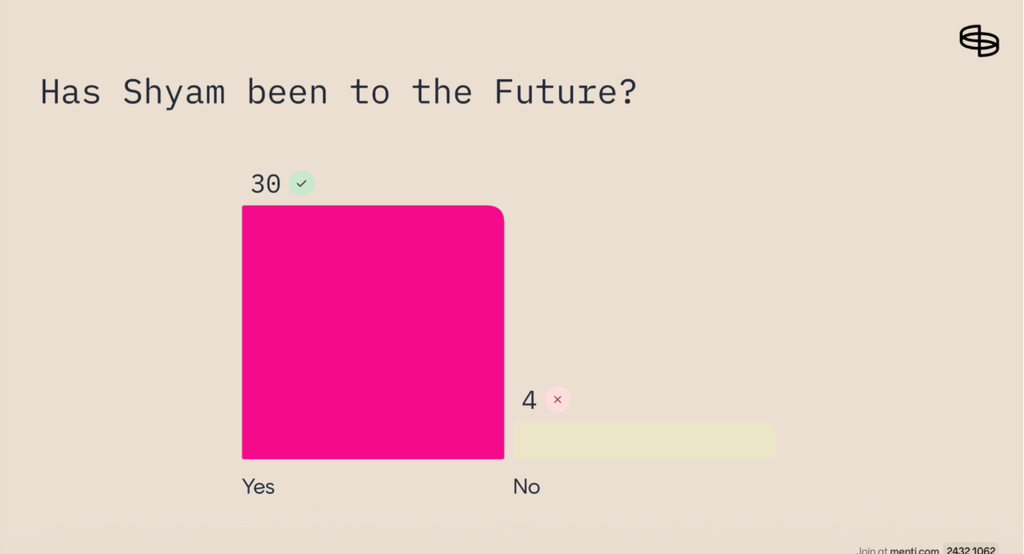
By the end of his interrogation, the distinction between human and machine had become a little less obvious. Welcome to the Liminal Space, that peculiar territory between the familiar and the unknown, where Shyam believes the most interesting discoveries are made.
From there, we traveled backward through history to better understand the future. Shyam introduced the concept of functional fixedness, our tendency to interpret new possibilities through the limitations of what we already know. Consider the once-thriving ice harvesting industry. When refrigeration technology emerged, the ice harvesters were busy improving their saws, horses, and sleighs, seemingly oblivious to the fact that their entire business model was about to become a historical curiosity.
The same pattern appeared as theater became film, radio became television, and newspapers migrated to the web. His point was particularly uncomfortable for a room full of agency owners contemplating AI. Are we discovering entirely new ways to create value, or are we just building better ice saws?
From there, Shyam took us deeper into the rabbit hole, challenging our understanding of how things are created in the first place. What if, instead of designing the outcome, we designed the conditions that allowed entirely new possibilities to emerge? Through a peculiar combination of art, science, technology, and a few experiments that left some of us scratching our heads, he began to reveal a different way of thinking about AI. Not simply as a tool to do what we’ve always done faster, but as something that could expand the boundaries of what we believe is possible.
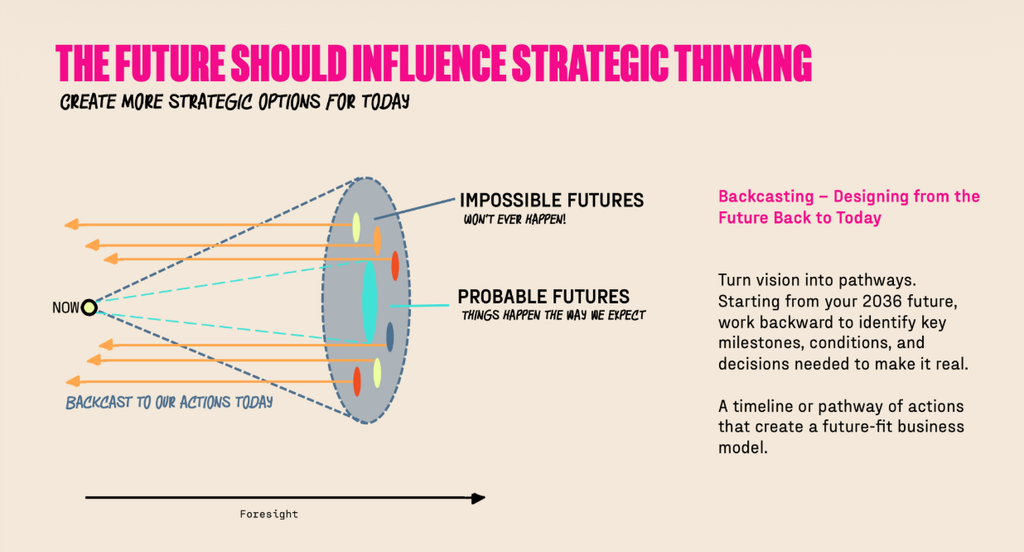
By the time we resurfaced, Shyam had transported us ten years into the future, where the familiar agency business model was no longer a particularly useful reference point. Our assignment was to imagine what might exist in its place, including possibilities that seemed downright absurd by today’s standards. It was a fitting conclusion to a journey that had repeatedly asked us to abandon our assumptions. Shyam may or may not have actually visited the future, but he certainly made a compelling case that our greatest limitation in getting there might be our inability to imagine it differently.
The Art of Building a Valuable Business – Russel Dubree
Needless to say, I value feedback, and three things from last year’s event stood out. More comfortable chairs? Check. More collaboration and connection time? Double check. More of Russel? Well, be careful what you wish for. So I obliged, using the opportunity to stress-test a few concepts that have been simmering in my brain kitchen for some time.
One of the recurring patterns I’ve noticed among agency owners is the tendency to throw tactical solutions at problems that really require foundational investments. As a longtime Warren Buffett admirer, I’ve always been drawn to the almost irritating simplicity of principles that produce extraordinary results. And few have demonstrated that better than the Oracle of Omaha.
Through the story of Russella, the fictional owner of Vidaazul (whose suspiciously familiar name was purely coincidental), we explored how the hustle and resourcefulness that create early success can eventually become limiting factors. A brief excursion through evolutionary biology, S-curves, and power laws helped illustrate why the capabilities that get us somewhere aren’t necessarily the ones that take us further.
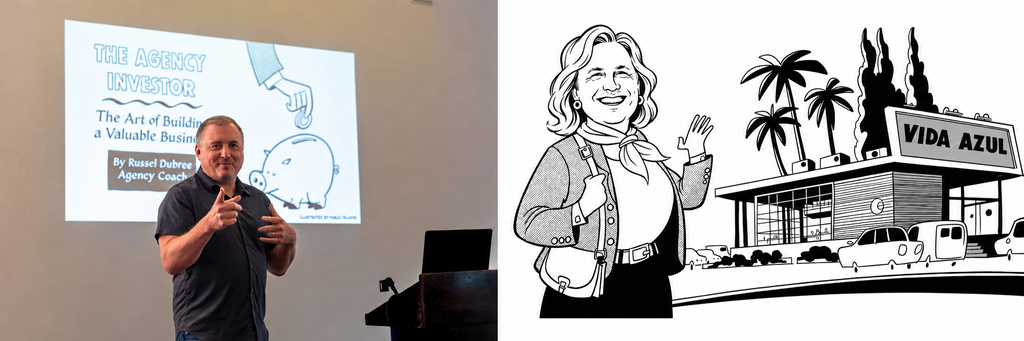
The alternative was to become a more intentional investor. Rather than constantly chasing the next solution, make meaningful investments in capabilities that fundamentally improve the business. I introduced seven such investments, though I’m not quite ready to unpack the entire framework in this recap. One example, however, illustrates the distinction.
Sales. No surprise, most agencies want a pathway to more, better clients, preferably one they can exert some control over. But rather than searching for the next magic tactic, perhaps the best investment is developing a much deeper understanding of your ideal customer.
And by deeper, I mean A LOT deeper. The kind of understanding where you could finish their sentences or give an hour-long speech about them. The familiarity you might have with a spouse, sibling, or close friend. Which, yes, requires narrowing your ideal customer definition well beyond a few surface-level demographics.
Because when you understand someone that well, it changes how you communicate, what you offer, and the value you’re capable of delivering. Your prospective clients don’t just see that you understand their world. They feel it. That’s one example of the investments.
Six additional investments and a little philosophical encouragement later, it was safe to say everyone’s brains were sufficiently full for the day. Visions of happy hour libations (or pillows) were beginning to take shape. We passed around a few final observations before hitting the streets of downtown McKinney to close out the day.
Chili Dogs, Cocktails, and Conversations
Another local favorite of mine, Shorty’s is a place I’d probably eat every day if my knees wouldn’t eventually buckle under the weight of all that calorie enhancement. Just a few steps from the venue, it was our first stop for some well-earned decompression. Nobody opted for the chili dogs, a surprisingly disciplined lot, but the mocktails, cocktails, and other beverages flowed as new friendships and connections took shape. You could probably have filled a book with agency insights from that hour alone, but alas, nobody was taking notes. And pictures for that matter apparently (I’ve clearly got some work to do in these moments). You’ll have to check out their Instagram for their cocktail artistry and coney lust.
The hour quickly came and went, and everyone dispersed to their respective small-group dinners. One group headed to a local brewpub, the other to a slightly quieter gastronomic destination. Unfortunately, I hadn’t yet mastered the art of being in two places at once. From what I understand, many conversations continued well into the wee hours of the night, but I unfortunately had to make my exit early to prepare for the real meat of the event: Day 2.
For many, the day began with a cup of joe from Collective Coffee, just 57 paces from the hotel entrance. Another local favorite of mine I was happy to share with the group. It’s where I spend most mornings doing my heads-down work before enjoy an afternoon of meetings. I’ve become enough of a regular that the staff starts preparing my milkshake-like coffee concoction the moment I walk through the door. It’s called The Kentucky, and it’s quite good, thank you very much.
After another well-prepared breakfast from the venue, it was time to get to the real work of Elevate.
Day 1 was about expanding perspectives. Day 2 was about turning those perspectives into something useful. The entire day was devoted to helping each owner work through the opportunities, challenges, and competing priorities facing their agency and emerge with a plan for the year ahead. My intention was that the previous day’s conversations had opened a few new doors in everyone’s thinking, perhaps even challenged some long-held assumptions. Now came the considerably less glamorous task of deciding what to actually do about it.
We worked through reflections on the year past, clustered ideas into common themes, debated priorities, and gradually narrowed an intimidating collection of possibilities into a more deliberate direction. Eventually, everyone had to encapsulate their entire year ahead into a single word. Two words were permitted for those with particularly elaborate ambitions.
And then there were our “battle buddies.” Borrowed from the military, the concept pairs you with someone whose job is to keep you accountable, offer perspective, and occasionally tell you what you might not want to hear. The Army has apparently provided TikTok with an endless supply of humorous battle buddy content, which I encourage you to investigate at your leisure. Our version involved considerably less physical suffering and a great deal more thoughtful conversation. These partners became an integral part of the day, providing a second set of eyes and ears as everyone wrestled with their plans.
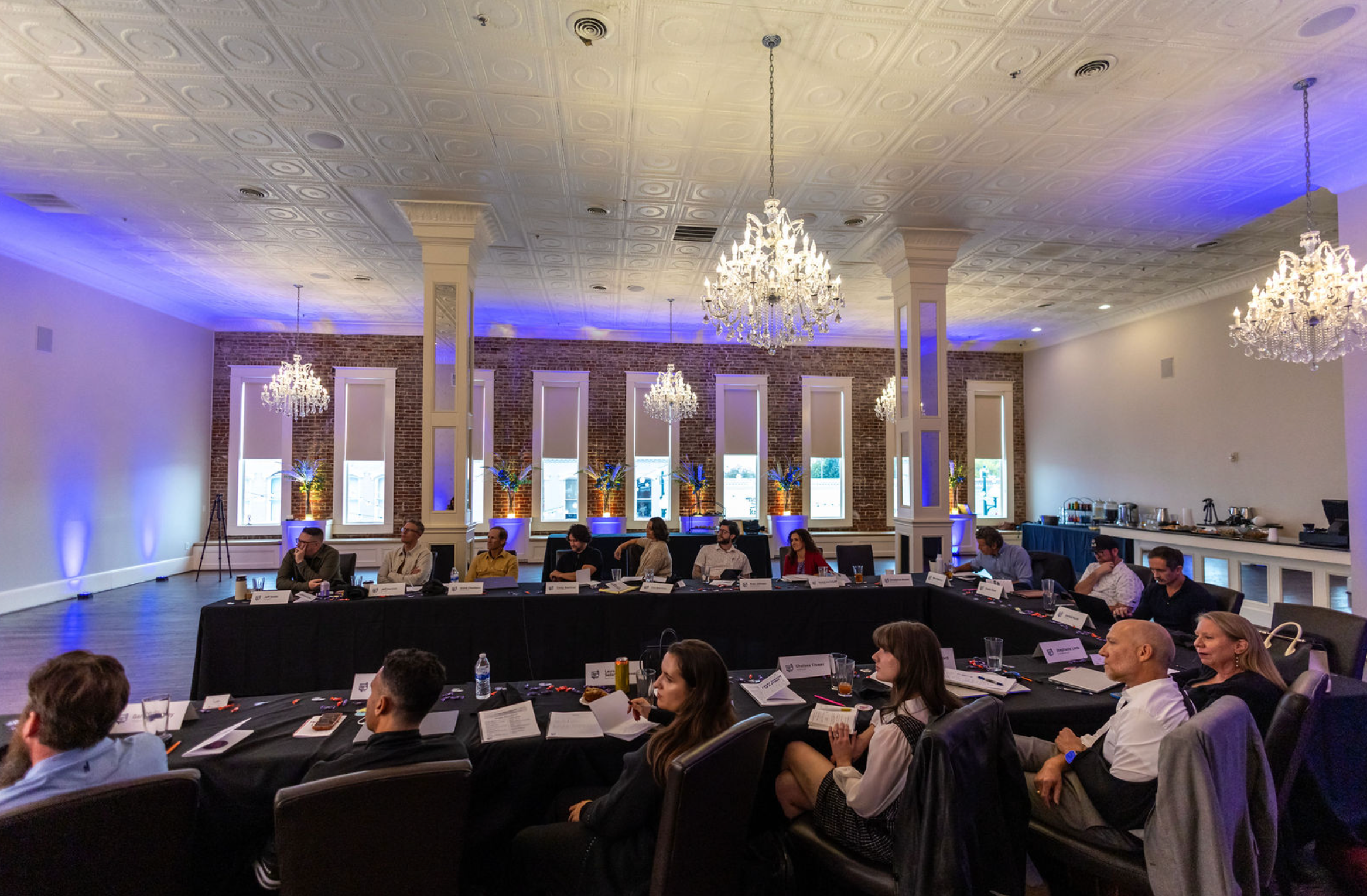
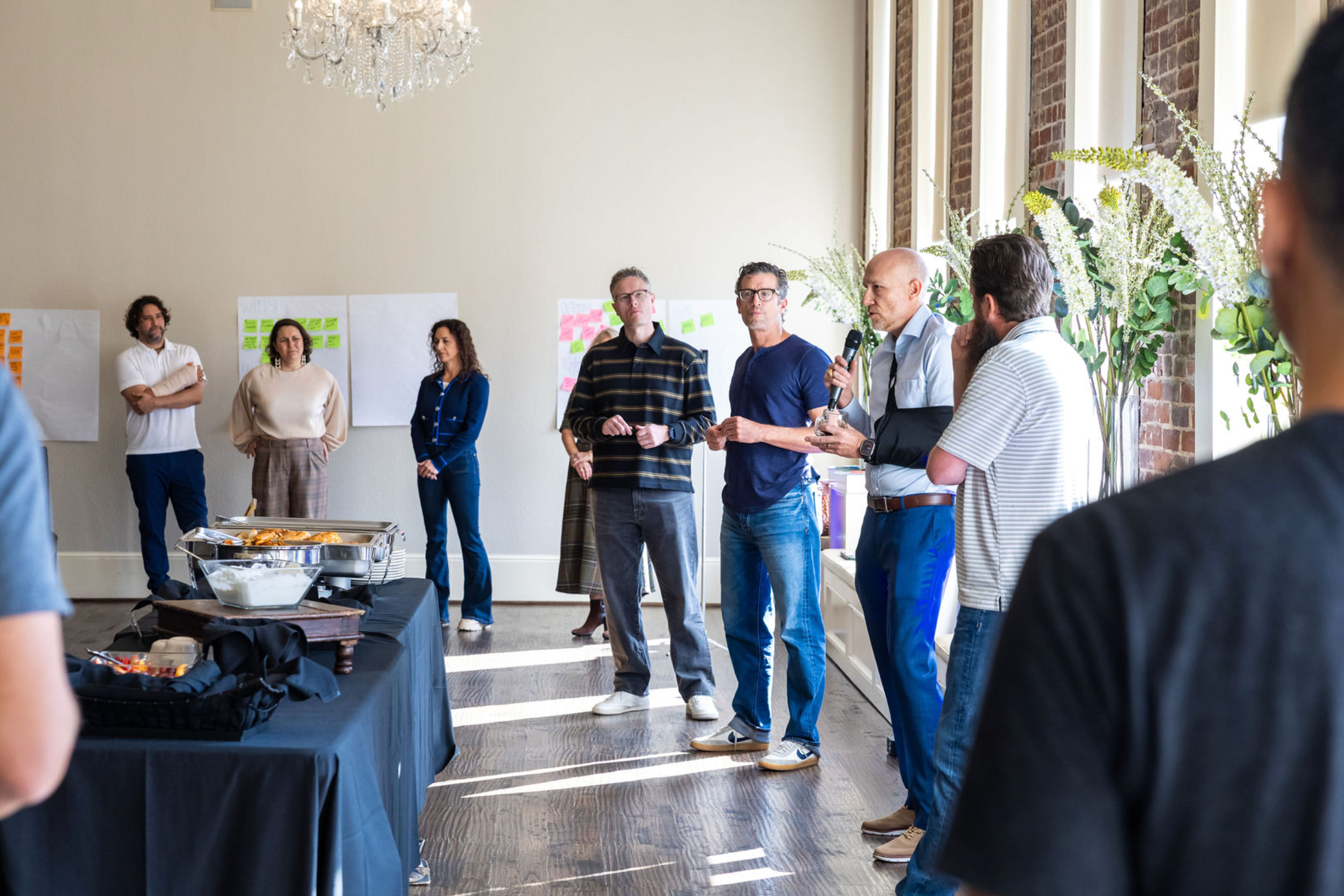
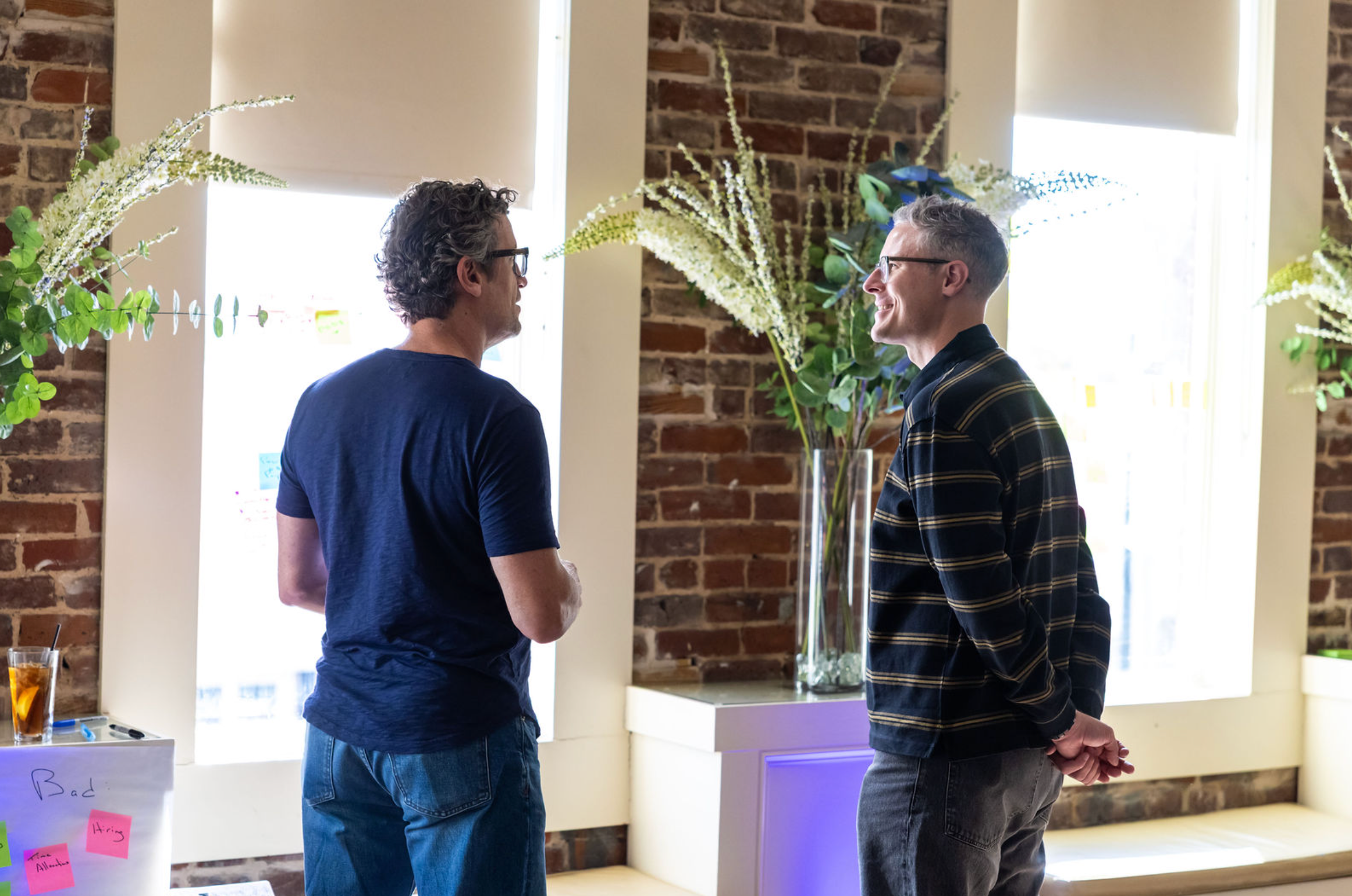
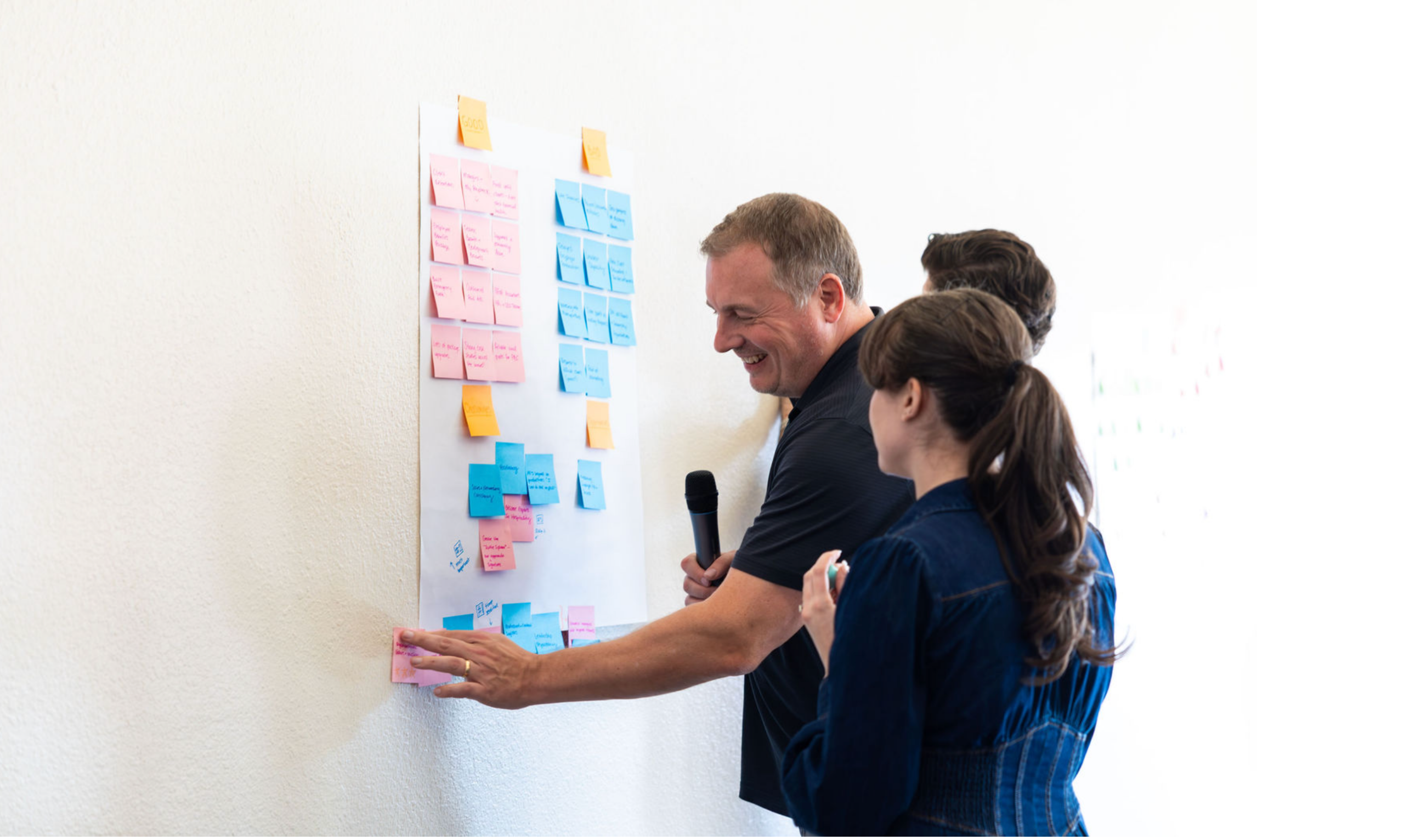
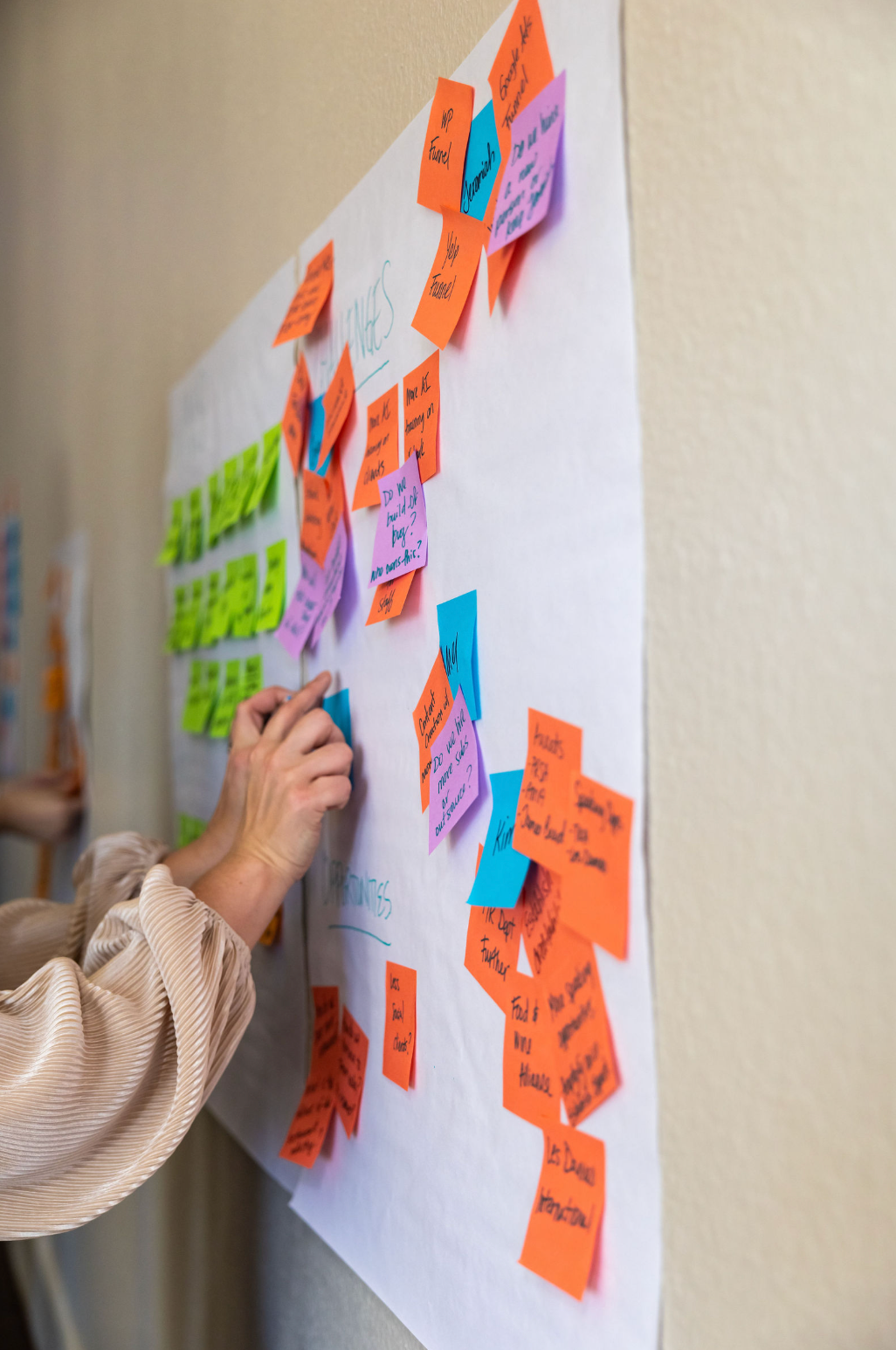

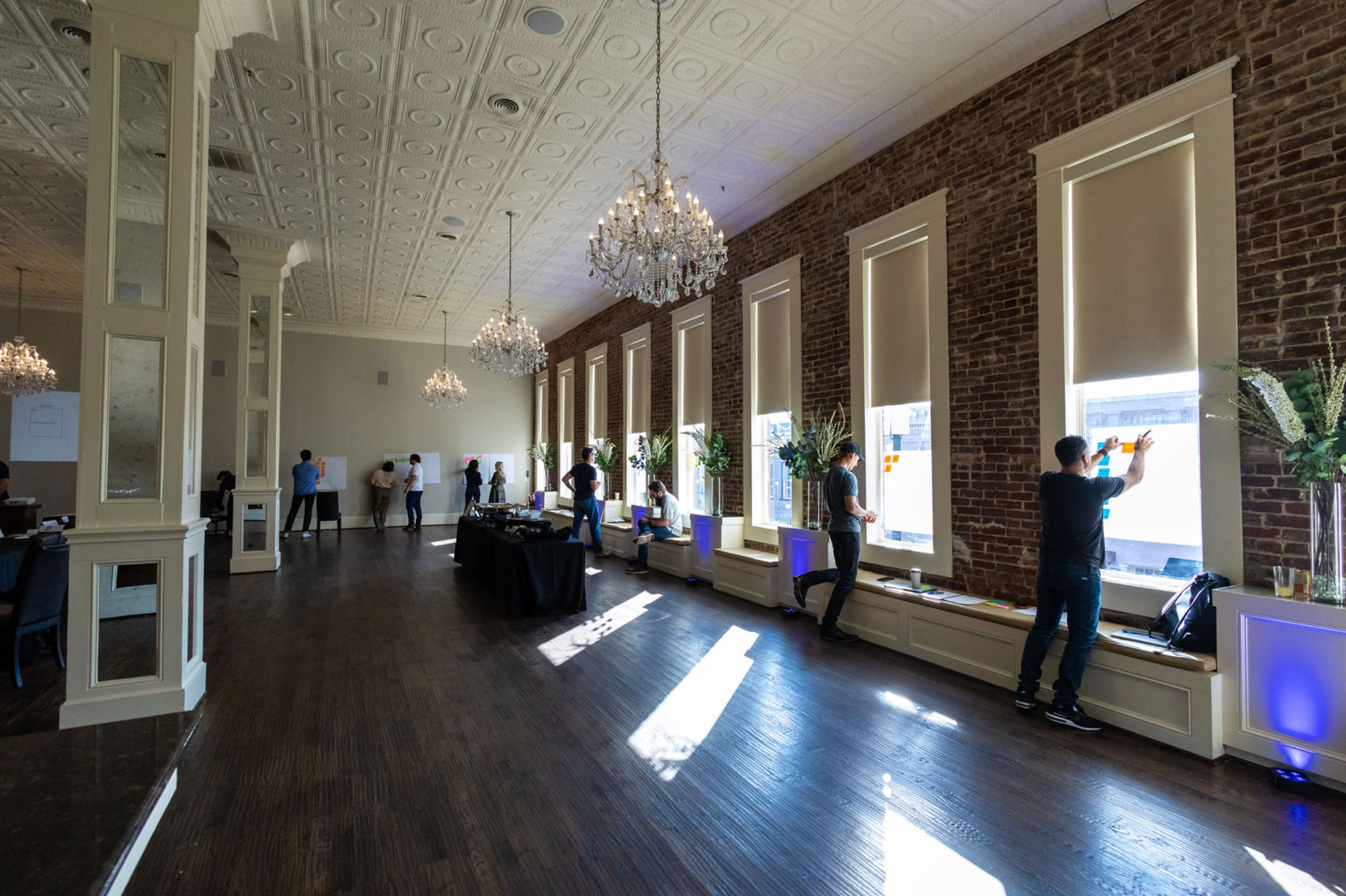
I’d like to report that the process was effortless, but that would defeat much of the purpose. Thinking critically about your business, challenging your assumptions, and deciding where to direct your limited time and energy is hard work. It should be. If the answers were obvious, we probably wouldn’t need to dedicate two days to finding them. Of course, we weren’t about to let an entire day pass without a little fun.
Having learned my lesson from the previous day’s recess miscommunication, we finally held our official recess with a spirited round of blindfolded state drawing. Think Pictionary, except you’re blindfolded and tasked with drawing a U.S. state. As it turns out, agency owners are surprisingly talented at this particular discipline. Both teams went a perfect five for five, forcing us to declare a tie and depriving everyone of the opportunity to claim artistic superiority.
By the afternoon, the scattered ideas and competing priorities had begun to take shape. Everyone had a clearer picture of where they wanted to go and, perhaps more importantly, where they intended to focus their energy to get there. We closed with each person sharing their word for the year ahead and what they were most excited about pursuing. The simplicity and creativity in their words were amazing from “Praventionsparadox” to “Resonance.” All in all, there was something particularly satisfying about seeing everyone arrive at their own conclusions, rather than leaving with a prescribed formula for success. And just like that, Elevate 2026 came to a close.
Goodbyes were exchanged, some hurried off to catch flights, and others extended their conversations well into the evening. As for me, I had some unfinished business with a chili dog. My brother Ryan, otherwise known as DJ Ginger for the event, and the man responsible for keeping our sound and lighting in order, joined me for a return trip to Shorty’s. We followed that up with a visit to the local arcade for some pinball and Guitar Hero. A perfectly appropriate way to decompress after two days of serious business contemplation, if you ask me.
Looking back, I’m proud of what we put together. But rather than rely exclusively on the glowing review of the person responsible for organizing the whole thing, I’ll let the attendees speak for themselves below. For the second year running, 100% of respondents said they would recommend Elevate to someone else and/or attend again. That’s a statistic I don’t take lightly, particularly knowing what it takes for an agency owner to step away from their business for two full days.
I’m immensely grateful to everyone who made that commitment. Not just for showing up, but for bringing their curiosity, candor, and willingness to engage in the kind of conversations that don’t always happen amid the demands of running a business.
A special thanks to Bri Crow for capturing the spirit and memorable moments of the event. To my partner in crime, Ryan Dubree of Complete Weddings and Events in Tulsa, for the lighting, sound, and occasional emotional support. And to my promoter in crime, Chelsea Flower of Scott Social, for helping bring the whole thing to life and getting the word out.
And, of course, a million thanks to our speakers, Peter Kang, Roy Page, Shyam Patel, and Teri Sun, for sharing their perspectives and giving us plenty to think about. You guys rocked.
Two days away from the daily demands of agency life won’t magically transform a business. But they can change what happens when you return to it.
And if the conversations, plans, and commitments made in McKinney find their way into the decisions these owners make over the next year, I’d call that time very well spent.
That’s a wrap for Elevate 2026.
Want to know more for Elevate 2027?
Get the early bird access to event info, registration, and discount pricing.
Don’t miss out!
Before you disappear into another browser tab, drop your email below. We’ll send you a little more about Elevate.